In Zhaocheng there lived an old woman of over seventy who had only one son. One day he went into the mountains and was devoured by a tiger. The old woman was so grief-stricken she hardly wanted to go on living, and she went wailing to the magistrate to lodge a complaint. The magistrate laughed. "How can the law of the land be applied to a tiger?" She only wailed louder and could not be stopped. He scolded her; she was not afraid. Then, pitying her age and unwilling to turn his anger on her, he promised to have the tiger caught. She lay prostrate and would not leave until the warrant had actually been issued. At a loss, the magistrate asked his runners which of them would go. One of them, named Li Neng, roaring drunk, stepped up to the bench and declared, "I can do it." He took the warrant and went down, and only then did the old woman leave. When the runner sobered up he regretted it; still, he supposed it was just the magistrate's charade to get rid of the old woman's pestering, so he didn't take it very seriously and handed the warrant back in. The magistrate flew into a rage. "You said you could do it. How dare you back out now?" Desperate, the runner asked for a warrant to conscript the hunters. The magistrate granted it. The runner gathered the hunters, and they lay in wait in the valleys day and night, hoping to catch a tiger, any tiger, just to discharge his duty. A month and more went by; he took several hundred strokes of the cane, and had nowhere to turn with his misery.
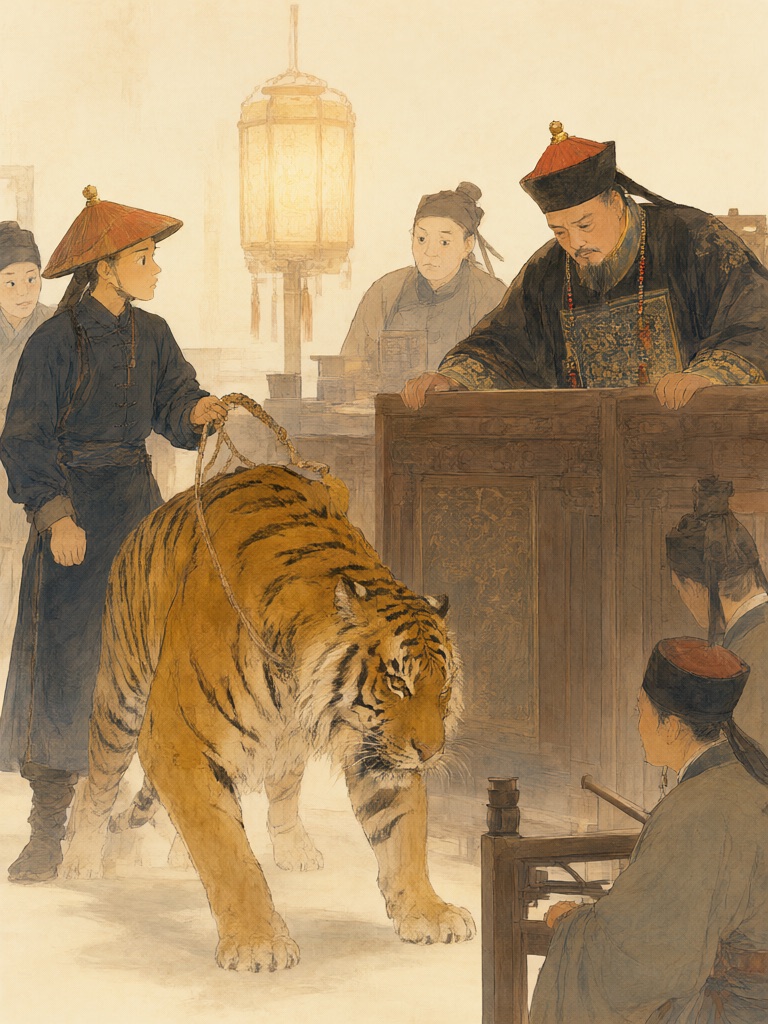
So he went to the Temple of the Eastern Peak outside the east wall, knelt and prayed, sobbing aloud. Before long, a tiger walked in from outside. The runner was stunned, terrified it would eat him. But the tiger came in, paid no attention to anything else, and sat down squarely in the doorway. The runner prayed to it: "If you're the one who killed that woman's son, bow your head and let me tie you up." He took out a rope and looped it around the tiger's neck, and the tiger flattened its ears and let itself be bound. He led it to the county yamen, and the magistrate asked the tiger, "Did you eat so-and-so's son?" The tiger nodded. The magistrate said, "He who kills must die; that has been the law since ancient times. What's more, the old woman had only one son, and you killed him. With her few remaining years, how is she to live? If you can be a son to her, I will pardon you." The tiger nodded again. So he had the ropes taken off and let it go.
The old woman was still resenting the magistrate for not killing the tiger to pay for her son when, at dawn the next day, she opened her door and found a dead deer there. She sold its meat and hide and lived on the money. From then on this became the rule, and at times the tiger would even carry gold or silk in its mouth and drop it in her courtyard. She grew well-off, better provided for than she had ever been by her son, and in her heart she was grateful to the tiger. When it came, it would often lie under her eaves all day long. Woman and beast lived in peace, with no suspicion between them. Some years later the old woman died, and the tiger came and roared in her hall. Her savings were more than enough for a funeral, and her clansmen buried her together. Just as the grave mound was finished, the tiger came charging up, and the mourners all fled. It went straight to the grave and roared like thunder, and only after a long while did it leave. The local people built a "Shrine of the Righteous Tiger" in the eastern outskirts, and it still stands today.